
Concerns have emerged about the impact of AI adoption on young workers, particularly those seeking their first job in high-skilled occupations.

India's new national accounts will leverage new data sources and surveys to enhance the measurement of the country's informal economy, and introduce double deflation methods across sectors, replacing the current system that relies on a single deflation mechanism in Gross Domestic Product (GDP) calculations.
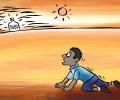
Algorithmic management (AM) in India has led to a decline in job quality, with "clear" evidence of increased monitoring, surveillance and work intensity, noted International Labour Organisation (ILO) in its latest report.

From appointment letters becoming mandatory to gig workers receiving social security to enhanced rights for women and contract labour, the changes reflect India's attempt to balance ease of doing business with stronger worker welfare.

With cotton still figuring in the list of commodities that are produced using practices such as child labour, the Confederation of Indian Textile Industry (CITI) has entered into an understanding with the International Labour Organisation (ILO) to create awareness, share technical know-how and knowledge about better labour standards. These standards, which are part of ILO Fundamental Principles and Rights to Work (FPRW), will be tried on a pilot basis in major cotton-growing districts of Madhya Pradesh for one year starting in 2024.

Saudi Arabia has scrapped its decades-old Kafala system, freeing 13 million migrant workers, including 2.6 million Indians, from restrictive employer control and exit visa rules.
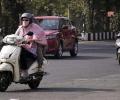
States are mandated to develop and implement 'heat HAPs' for prevention of heat-induced diseases. But most do not go beyond standard advisory on heat prevention.

'The Railways is today running train services with 30% less number of loco pilots.'

ILO acts upon a plea by 10 central trade unions objecting to the ordinances proposed to temporarily scrap labour laws in Uttar Pradesh and Gujarat, along with executive orders issued by at least 10 states to increase the daily working limit to 12 hours from eight hours, along with other labour law changes.

According to Staermose, the main issue is that the changes in labour laws should be done after holding extensive tripartite consultations.

In India, total employment grew by only 0.1 per cent yearly over the five years till 2009-10, says the report, "from 457.9 million in 2004-05 to 458.4 mn in 2009-10, while labour productivity grew 34 per cent over this period".

'In India, managers and the leadership almost glorify overworking.'

Amid a debate over 70-90-hour work week, the pre-Budget Economic Survey on Friday cited studies to state that spending over 60 hours a week on work could have adverse health effects. The survey noted that spending long hours at one's desk is detrimental to mental well-being and individuals who spend 12 or more hours (per day) at a desk have distressed or struggling levels of mental well-being.
Even as the world celebrates Women's Day on Tuesday, the International Labour Organisation said women are a group severely excluded from India's growth and development.
The ILO has forecast that global unemployment could increase by more than five crore this year unless policies are implemented which balance social and economic dimensions.
India will soon write to the International Labour Organisation seeking its help to combat the scourge of penury and bring down the poverty ratio to 19 per cent by 2007 from the present level of 26 per cent.\n\n\n\n

'They sell such ideas in the name of 'national interest'.' 'What national interest are they talking about?' 'There is no national interest in this. The only interest that is there is their profit.'
"India has ratified Radiation Protection Convention, 1960 of the International Labour Organisation (ILO) but its provisions have not been complied with. It is yet to ratify ILO's Occupational Cancer Convention, 1974 which is concerning Prevention and Control of Occupational Hazards caused by Carcinogenic Substances.

India has performed poorly in providing social security protection to its people until recently with "very high vulnerability" to poverty and informal labour practices in the world, according to the International Labour Office.

'The government should come back as a job creator as it did in the 1960s and the 1970s.'

But Indians work less than smaller countries with small populations like Bhutan, the Congo, Lesotho and Gambia.

South Asian countries, led by India, registered a rapid economic growth in 2010 and their unemployment rates dipped marginally from the previous year, says the latest annual Global Employment Trends (GET) report of the International Labour Organisation (ILO).

'A person is supposed to do 40 to 42 hours of work a week.' 'If a person is working more that, it is exploitation.' 'And it is because of this exploitation that employees experience stress which affects their mental health.' 'Sometimes it even leads to ending their lives. It is very unfortunate.'

62 per cent of respondents across various demographics, including villages, towns, and cities, perceived a greater difficulty in securing employment compared to the previous five years, shows pre-poll survey by Centre for Study of Developing Societies.

'The more educated a young person is, the higher the chances of him or her remaining unemployed.'
'Don't get stressed if you are not able to do your work.' 'If you feel you do not have the skill or capacity to do some work, accept it.'

Industrial disputes dropped 89.3 per cent to 34 in 2022 compared to 318 a decade ago, shows central and state data.
Prime Minister Narendra Modi led-NDA government in its third term must tackle the problem of unemployment in the country, especially in the unorganised sector and in small and medium enterprises, former NITI Aayog Vice Chairman Rajiv Kumar said on Monday. Kumar also emphasised that the government now must finalise the four labour codes as it has been delayed beyond expectations. "We must recognise that post-COVID economic recovery has been a K-shaped recovery.

'Generating employment requires a shift in policy.' 'If not, the country will face economic, social and political challenges in the coming years.'
Employment in India saw a V-shaped recovery after being adversely impacted between April and June 2020 during the Covid lockdown and during April-June 2021, when the second wave struck, said Krishnamurthy V Subramanian, former chief economic advisor, in a paper released on Friday. Subramanian is now serving as executive director of the International Monetary Fund (IMF). From the official survey data of the National Sample Survey Organisation (NSSO), the paper titled 'Employment in India: Data Sources, Facts, and Trends' showed that both worker-population ratio (WPR) and labour force participation rate (LFPR) were higher, while the unemployment rate was lower during October-December 2022 when compared to the corresponding quarter in 2019.

India stands to lose more working hours to extreme heat than the rest of the world, in addition to the humanitarian cost of extreme heat events.

A combination of one of the lowest labour costs and a large surplus workforce, which will continue to grow until 2031, is one of the key competitive edges that India is leveraging to challenge its rivals in Southeast Asia in the race for a China-Plus-One strategy. Apart from India, the countries in the race to woo global companies that manufacture in China, as well as the supply chains to their country include Thailand, Indonesia, Malaysia, the Philippines, and Vietnam. On the labour front, India is a clear winner.

Bringing to the fore the ugly face of 'forced labour' in India, a new study by the International Labour Organisation has said bonded labourers often lose their freedom to choose employment due to lack of transparency in wage system and continue to work for unlimited period.

The court also ordered that of the total fine amount imposed on the convicts, Rs 12 lakh will be paid to the victim's family.

The average salary hike of top-paid chief executive officers (CEOs) in four countries, India, the USA, the UK and South Africa, was 9 per cent, but the workers in these countries saw their salary dip by 3.19 per cent, an analysis by Oxfam on International Workers' Day on May 1 showed. Based on data from the International Labour Organisation (ILO) and government agencies, the analysis also showed that workers in these countries worked "for free" for six days last year because their wages lagged behind inflation. One billion workers in 50 countries took an average pay cut of $685 in 2022, a collective loss of $746 billion in real wages, compared to if wages had kept up with inflation, it said.
Economists on Tuesday are not convinced about the latest monthly unemployment data released by the Centre for Monitoring India Economy (CMIE), particularly about the statistics of the rural areas. They asserted that it is difficult to get the real picture of unemployment from the methodology used by the CMIE to get the data. The overall unemployment rate in India has increased to 7.83 per cent in April 2022 as compared to 7.60 per cent in the previous month, CMIE said in its report.

India has declined assistance offered by the United Nations of its integrated supply chain for COVID19-related material, saying the country has a "robust system" to deal with the required logistics, a spokesperson for UN Secretary General Antonio Guterres said.

'Nobody is talking about the inequality that is going to come.'
The latest evidence that caste discrimination in the country is alive and kicking in the country is a report by the International Labour Organisation.
 © 2026 Rediff.com - Investor Information - Advertise with us - Disclaimer - Privacy Policy - Sitemap - Feedback - About us - Terms of use - Grievances